IMF Study Highlights Stronger Financial Resilience of Companies in Bosnia and Herzegovina, Creating a More Attractive Investment Environment in Sarajevo Canton
The findings of a new International Monetary Fund (IMF) study on the financial resilience of companies represent an important signal for investors, while infrastructure development, the new Urban Development Plan and growing interest from foreign companies are creating additional opportunities for investment in Sarajevo Canton.
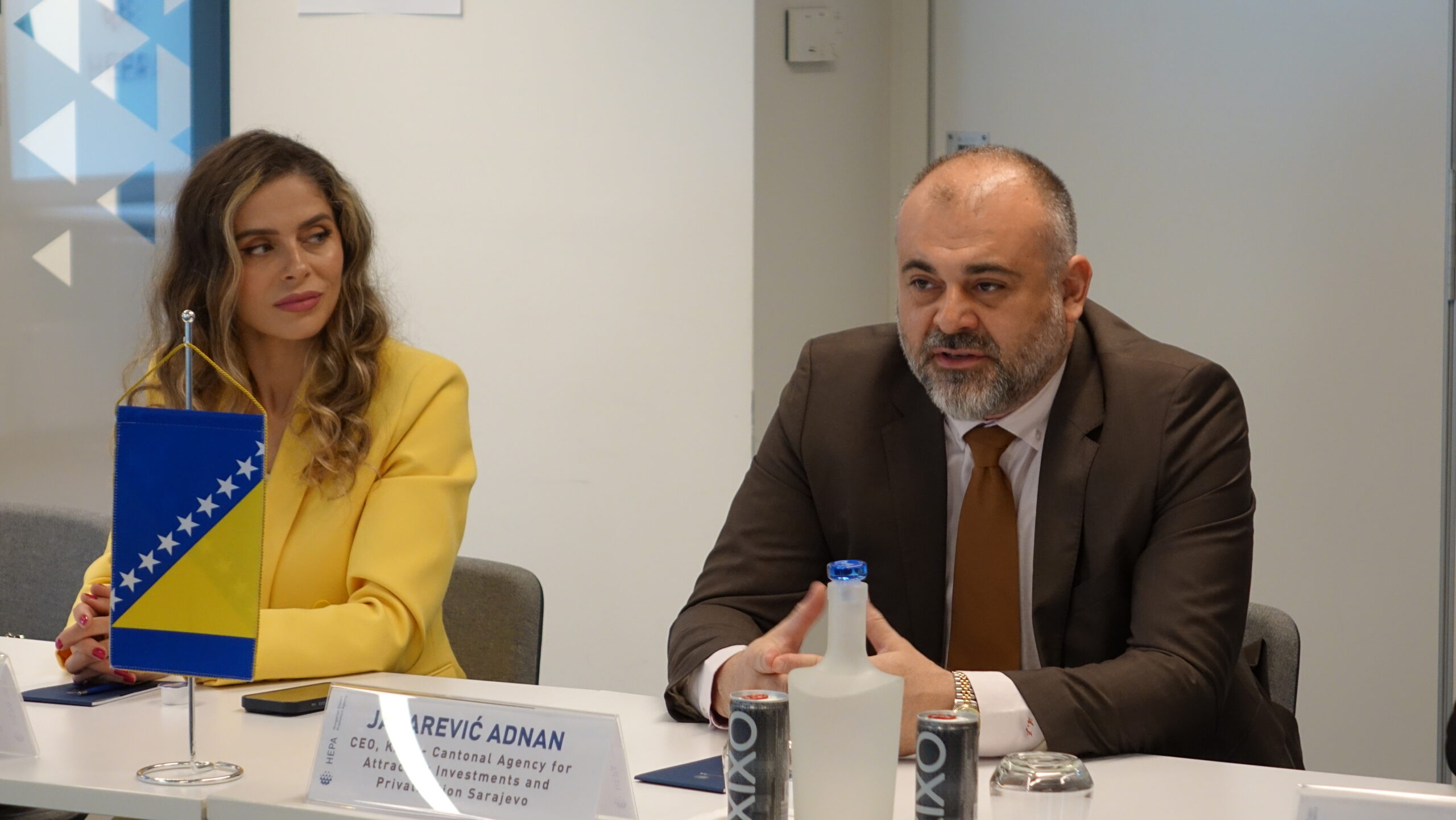
The financial position of companies in Bosnia and Herzegovina has improved significantly over the past decade, with higher profitability, improved liquidity, moderate levels of indebtedness and stronger debt-servicing capacity. According to Adnan Jašarević, Director of the Cantonal Agency for Attracting Investments and Privatization of Sarajevo Canton (KAIP), these trends represent an encouraging signal for potential investors.
Jašarević points to key findings from the IMF’s latest study, which is based on aggregated economic statistics and companies’ balance-sheet data. He notes that such analyses are particularly relevant from an investment-promotion perspective, as they provide international companies with an objective picture of developments in the domestic economy, including Sarajevo Canton.
“For investors, in addition to market potential, financial stability, the resilience of companies and the ability of the economy to respond to changes and challenges are of great importance. It is therefore encouraging that, based on data and an analysis of companies’ financial statements, the IMF has identified significant improvements across several key indicators. These findings should be viewed as an objective assessment of the current state and development of the corporate sector,” Jašarević said.
According to the study, the profitability of non-financial companies has increased over the past decade across different sectors and categories of businesses.
The IMF reports that the median profitability indicator increased from 9% to 29%. Improvements were recorded across all sectors, with particularly strong growth in other services, electricity generation and distribution, and construction.
Jašarević considers the increase in profitability one of the indicators that can contribute to attracting new investment.
“When companies achieve stronger financial results, strengthen their balance sheets and improve their ability to service their obligations, this sends an important signal to potential partners and investors,” Jašarević said.
The study also records a significant improvement in companies’ ability to service their debt. The share of companies exposed to debt-servicing risks declined from approximately one quarter of all companies in 2011 to 9% in 2024.
At the same time, the overall indebtedness of the corporate sector remained relatively stable in relation to GDP, while liquidity indicators improved. The IMF nevertheless cautions that certain sectors may remain vulnerable to adverse economic and financial shocks.
“These findings are important because investors do not look only at the current size of a market. They also consider the broader picture: the financial health of the business sector, access to financing, infrastructure, the regulatory environment, the ability to plan for the long term, and the development priorities of the Government of Sarajevo Canton,” Jašarević said.
Sarajevo Canton: Infrastructure and New Investment Opportunities
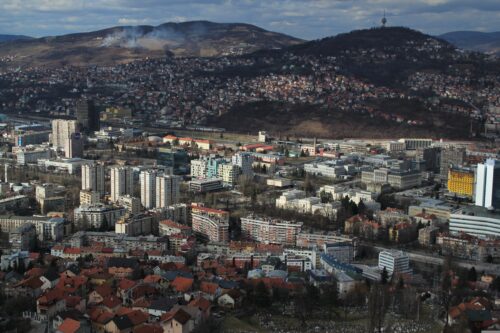
Speaking about Sarajevo Canton, Jašarević noted that investment activity is continuing this year, with public investment playing an important role. Such projects create the necessary conditions for business development, improve connectivity and accessibility, and can further increase the interest of domestic and international companies in investing in the Canton.
The anticipated adoption of the new Urban Development Plan of Sarajevo Canton is particularly important, he said, as it is expected to provide greater predictability in spatial development and a clearer framework for identifying future investment opportunities.
“In our discussions with international companies, we are seeing growing interest in business and investment opportunities in Sarajevo Canton. We experienced particularly strong interest last week during the MUSIAD exhibition in Istanbul. Our task is to provide investors with reliable information, present concrete investment opportunities, and help them understand administrative procedures and potential challenges they may encounter,” Jašarević said.
Despite numerous economic and global challenges, Jašarević expects the positive investment trend in Sarajevo Canton to continue throughout the year.
“We are not looking for investment for investment’s sake. We are looking for high-quality investments that create additional value for Sarajevo Canton and Bosnia and Herzegovina. These are projects that, alongside delivering legitimate returns for investors, create new jobs, facilitate the transfer of knowledge and technology, improve productivity, strengthen the competitiveness of domestic companies and contribute to the development of local communities,” Jašarević emphasized.
According to Jašarević, connecting positive indicators from international economic analyses with concrete development projects and a predictable business environment can further strengthen the position of Sarajevo Canton as an attractive investment destination.
Invest in Sarajevo is committed to providing investors with reliable information, identifying concrete investment opportunities and facilitating their engagement with public institutions and the local business community.